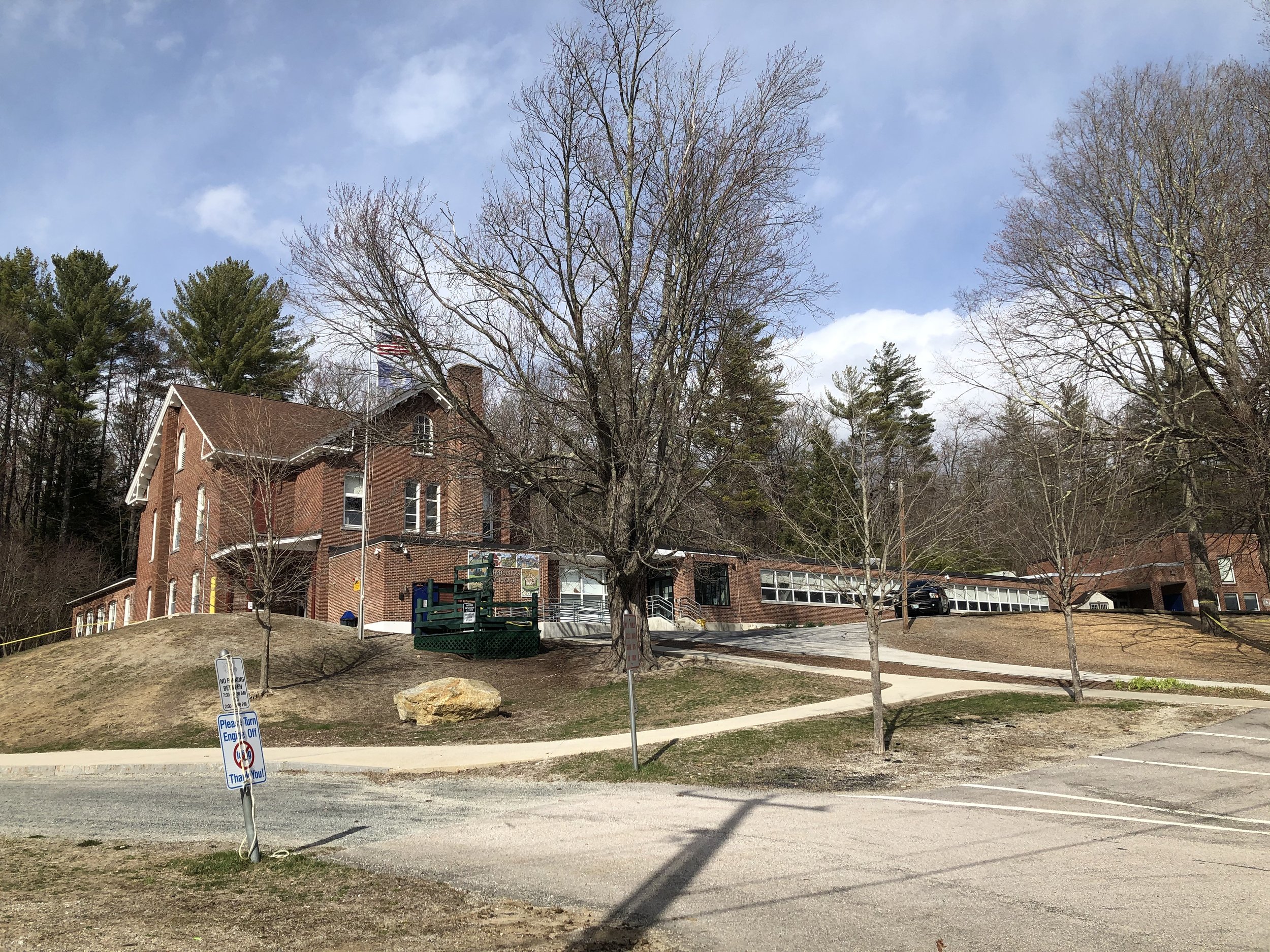
Simonds in Warner and Sutton Centeral elementary School are Under threat
The Kearsarge School Board recently voted to propose consolidating elementary schools in the Kearsarge Regional School District by closing Simonds Elementary in Warner and Sutton Central Elementary School. This proposal has been put forward despite many unanswered questions about real cost savings and the impact on students.
The plan requires an $18 - $20 MILLION addition to Bradford Elementary School.
This proposal will increase class sizes and has yet to demonstrate tax savings to communities.
SIGN UP TO STAY UP TO DATE ON IMPORTANT MEETINGS AND VOTES: https://forms.gle/mvEhkQmdiKj3eDGS6
Kearsarge In the media:
Concord Monitor, September 13, 2026: Proposed consolidation of Kearsarge Regional elementary schools draws swift reactions from parents, community members
Concord Monitor, September 9, 2026: New ‘elementary configuration’ could mean closure of Kearsarge Regional’s Simonds, Sutton Central schools
School Board's Recommendation to Close Simonds and Sutton Fact Sheet
No Real Cost Savings Plan
The School Board hasn’t released the tax numbers for how much money consolidating schools would save residents in property taxes.
Combining Simonds and Bradford requires building an $18-20 million addition on Bradford to accommodate all the students—more than four times the known costs of repairing Simonds and Sutton together.
No Data Supporting Consolidation as the Best Option
An analysis shared with the School Board specifically stated that total K-5 enrollment estimates could vary by up to 150 students by 2034-35 and that population projections not be used to make major facilities or consolidation decisions.
The district hasn’t done a transportation study showing busing costs for a combined elementary school system—especially with fewer students walking to school if Simonds closes.
Reductions in teachers and staff would likely be gradual (meaning less savings to taxpayers) and could trigger negotiation obligations under the collective bargaining agreement.
No Input from Towns, Families, or Communities
The School Board hired Hanover Research to conduct a community survey on school consolidation, but voted to move forward with school consolidation planning before the results were in.
The Hanover survey is only open for two weeks—a narrow window for responses. (In comparison, Warner’s 2025 Housing Survey was open for over two months!)
The Hanover survey has limited community reach—it’s online only, boosted on Facebook, and posted in newspapers and on flyers.
Hanover Research recommended that the School Board conduct community engagement (such as a survey, focus groups, etc.) before making a decision to work toward school consolidation—not after.
In their March 2025 report, Lavallee Brensinger Architects also recommended getting stakeholder feedback during every stage of the process—not just after the Board decided their course.
There’s been no recent conversation with 6 out of 7 Town Select Boards about closing or combining their schools.
The School Board hasn’t considered economic impacts from closing Simonds and Sutton, including decreased property values, fewer families moving to the area, problems resulting from blighted empty buildings, or loss of community spaces.
No Plan for the Empty Elementary School Buildings
If closed, Simonds Elementary could go to a distant descent of the Dow family who gifted the land in the 1800s as a school—requiring a costly and complicated legal process to find the new legal owner.
If closed, Sutton Elementary could go back to the town, causing taxpayer time and administrative trouble.
No Weighing the Options for Repairing Our Schools
The School Board never considered a plan for handling repairs at all four elementary schools.
Could local labor do the work cheaper? The District hasn’t asked local contractors or parents who want to keep their schools open if they could help or give a discount on repair projects.
Sutton’s estimated repair costs total $1,381,750—the smallest out of all four schools.
Both Lavalley Brensinger Architects and the Facilities B Committee briefly discussed closing or demolishing the 1871 portion of Simonds with critical needs instead of closing the entire school, but the Board never considered this as a serious option or strategy.
The School Board’s final Facilities B report groups all repair costs for each school into one big number, rather than by priority. The Board hasn’t considered how costs could be spread across multiple years to reduce tax impact.
The School Board doesn’t have a CIP (Capital Improvement Plan) for squirreling away money year to year for big repair projects like towns do, which is a big part of why we’re in this mess.
Tell the School Board Closing SChools Isn’t the answer
Please take a moment to contact the school board and share your concerns:
Michael Bessette, Superintendent of Schools: mbessette@kearsarge.org
James MacKenna, New London: jmackenna@kearsarge.org
David Keith, New London: dkeith@kearsarge.org
Art Bobruff, Springfield: abobruff@kearsarge.org
Patrick McGowan, Warner: pmcgowan@kearsarge.org
Paul Lakevicius, Warner: plakevicius@kearsarge.org
Nancy Glynn, Sutton: nglynn@kearsarge.org
Alison Mastin, Wilmot: amastin@kearsarge.org
Eric Gregoire, Bradford: egregoire@kearsarge.org
Kristen Schultz, Newbury: kschultz@kearsarge.org
Debra Breault, Warner: dbreault@kearsarge.org